Symons vs HPT Hydraulic Cone Crusher: Differences
May 12, 2026
Summary:Relying on a Symons spring cone is a guarantee of maintenance hemorrhage. When an excavator tooth stalls the cavity, you lose six hours to manual digging and bottle jacks. The HPT hydraulic series replaces metallurgical spring fatigue with 9-11 MPa nitrogen accumulators and push-button cavity clearing, instantly terminating daily downtime and boosting cubical aggregate yield by over 25%. Stop bleeding labor hours on obsolete mechanics.
Arresting 6-Hour Maintenance Bleed in Symons vs HPT Hydraulic Cone Crusher: Differences
- Tramp Iron Recovery: 6 hours of manual excavation (Symons) versus 8 minutes of automated hydraulic lift (HPT).
- CSS Calibration Physics: Mechanical cable winching versus millimeter-precise hydraulic drive motor rotation.
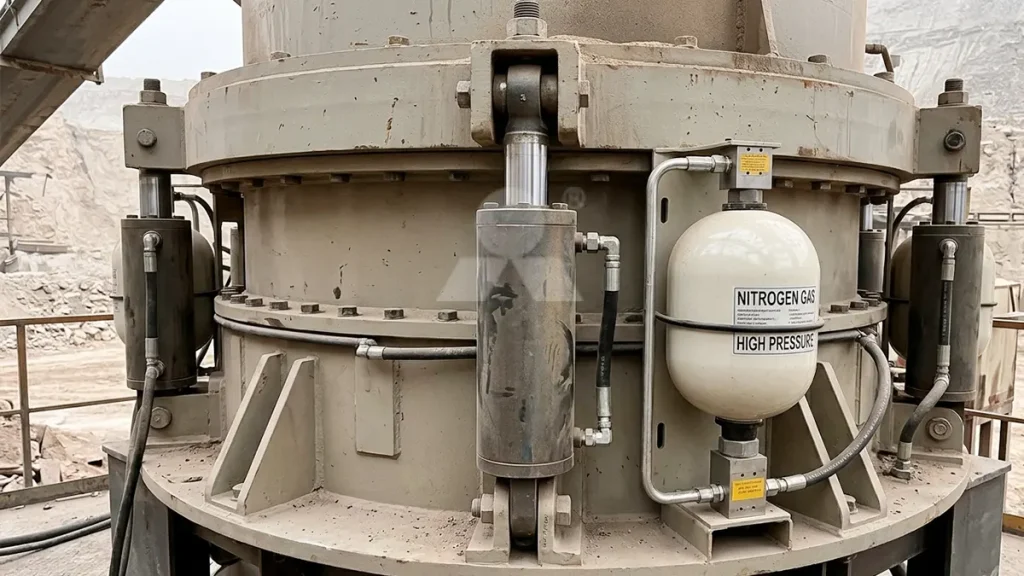
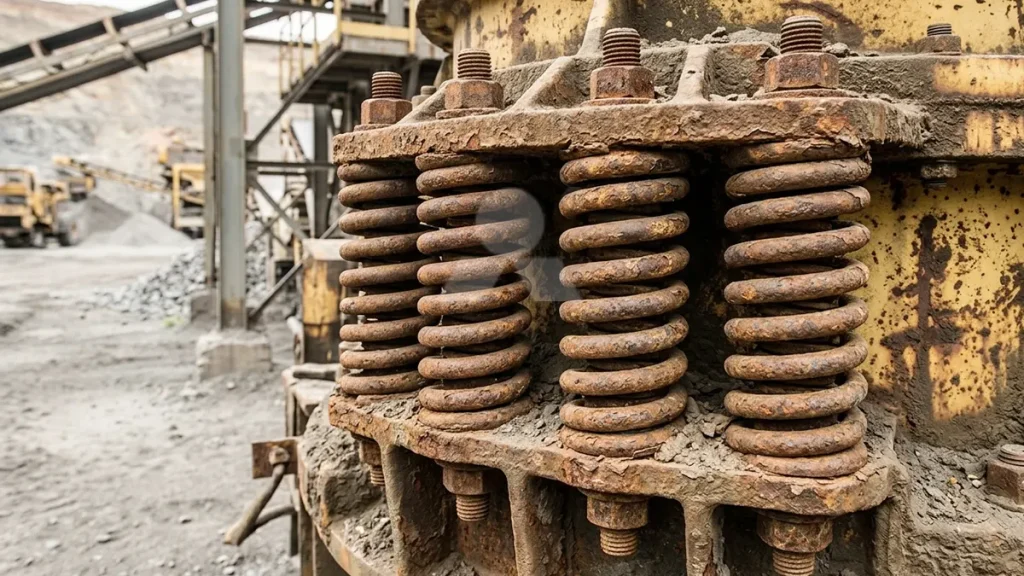
- Hold-Down Force Degradation: Metallurgical spring fatigue versus unyielding 9-11 MPa nitrogen accumulators.
- Yield Velocity: Single-particle compression versus high-RPM lamination crushing for 25% more cubical fines.
Tramp Iron Seizures and the 6-Hour Excavation Nightmare
A 5kg piece of stray steel is enough to destroy an entire shift on a spring cone.
I have spent too many 12-hour shifts standing in the mud, staring at a jammed Symons. When a broken excavator tooth sneaks past the magnet and stalls a traditional spring cone, the operation dies. Mechanics must physically climb onto the machine, drag in heavy hydraulic bottle jacks, wedge them between the frame, and painstakingly lift the adjustment ring. You then spend up to 6 hours manually digging out packed, crushed rock just to free the iron. The downtime hemorrhage is catastrophic.
The HPT series eliminates this manual torture.
When an HPT300 encounters uncrushable iron, the dual-acting hydraulic cylinders sense the pressure spike. The operator pushes a button on the PLC terminal. The cylinders physically lift the entire upper frame, expanding the cavity geometry instantly. The iron drops onto the belt. The cylinders reset the bowl to the exact previous Closed Side Setting. The entire crisis is resolved in under 8 minutes without a single mechanic touching a shovel.
CSS Calibration: Cable Winches vs. Hydraulic Motors
Manganese liners wear down every single day. If you do not tighten the CSS to compensate, your aggregate size swells, and your recirculating load chokes the secondary screens. Adjusting the CSS on a Symons is a physical brawl. You must halt the feed, lock out the motor, physically pull heavy mechanical locking pins, and drag a rusted cable winch around the machine to rotate the bowl. It steals 45 minutes of production time.
Operators hate doing it, so they ignore the wear, destroying the production-to-labor ratio.
The HPT utilizes a high-torque hydraulic drive motor bolted directly to the gear ring. Adjusting the CSS requires zero physical labor. The operator taps the touchscreen, and the hydraulic motor rotates the bowl, allowing for millimeter-precise CSS calibration while the machine is idling. You compensate for manganese wear daily, maintaining exact product sizing without bleeding labor hours.
Upgrading to hydraulic hold-down forces directly correlates to higher throughput and reduced physical maintenance.
| Engineering Variable | Legacy Symons (PYB/CSB) | HPT Hydraulic Series | Operational Impact |
|---|---|---|---|
| Cavity Clearance | Manual Jacks & Excavation | Automated Hydraulic Lift | Hours vs. Minutes |
| Hold-Down Force | Coil Springs (Subject to Fatigue) | Nitrogen Accumulators (9-11 MPa) | Eliminates Bowl Float |
| CSS Adjustment | Mechanical Cable Winch | Hydraulic Drive Motor | Zero manual labor |
Look at the hold-down force parameters. The HPT relies on a sustained 9-11 MPa of nitrogen pressure inside the accumulators. This is an unyielding, measurable, and constant force that ensures the bowl remains absolutely rigid during peak kinetic loading.
HPT300 vs Hard Rock: Kinetic & Hydraulic Thresholds
- Production Yield: Sustained 280-310 tph under continuous load
- Rotational Motor Drive: 250 kW enforcing high-RPM lamination
- Accumulator Integrity: Locked at 9-11 MPa nitrogen pressure
- Max Feed Toleration: 230 mm raw input
- Cavity Clearing Time: <8 minutes via dual-acting lift cylinders
LH-SYMONS_VS_HPT_HYDRAULIC_CONE_CRUSHER_DIFFERENCES-April/2026-Ref-#81924
Metallurgical Fatigue and Bowl Float
A crusher must physically contain the violence of rock breaking. The Symons relies on a perimeter of massive steel coil springs to hold the upper bowl down against the crushing force. After 5,000 hours of brutal operation, these heavy coil springs suffer from severe metallurgical fatigue. They lose tension.
Field Note: When a Symons spring fatigues, you can physically see the heavy bowl jumping and “floating” off the mainframe every time a hard piece of diorite enters the chamber.
When the bowl “floats” under heavy load, your CSS is constantly opening. Your 15mm setting is actually yielding 25mm rock, completely destroying the crushing ratio. The HPT completely eliminates springs. It replaces them with nitrogen accumulators locked at a strict 9-11 MPa. This hydraulic pressure does not suffer from metallurgical fatigue. It provides an unyielding hold-down force, ensuring the CSS remains absolute until tramp iron forces an intentional release.
Terminate the Manual Labor Bleed
Upgrade to hydraulic dominance and eliminate manual CSS adjustments immediately.
Clinging to outdated mechanical spring technology is intentional operational sabotage. The physical reality of crushing hard rock demands instantaneous hydraulic intervention. If you force your maintenance crew to continue fighting jammed cavities with bottle jacks and cable winches next month, the resulting downtime hemorrhage will completely erase your profit margins. The HPT series replaces metallurgical fatigue with 9-11 MPa nitrogen accumulators, enforcing a rigid CSS while delivering 25% more cubical aggregate through high-RPM lamination.
Upgrade to hydraulic dominance and eliminate manual CSS adjustments immediately.
