Tungsten Ore Waste Rock Sand Making Plant Flowsheet Configuration
October 27, 2026
Summary:Processing tungsten tailings and mine waste rock into high-grade manufactured sand presents unique metallurgical hurdles due to extreme variations in mineral hardness. This engineering guide evaluates the economic and mechanical differences between single-stage and two-stage crushing circuits. Written by a senior process engineer, the article explains why underground waste rock exceeding 45mm requires secondary reduction using Liming Heavy Industry’s HST Cone Crushers before entering VSI6X Sand Makers to prevent excessive over-pulverization, control wear part costs, and ensure a highly profitable operation.
Utilizing tungsten concentrator tailings and underground mine waste rock to produce commercial manufactured sand is a rapidly growing trend in sustainable mining. However, the core engineering challenge lies in the extreme disparity of hardness among the associated minerals. In this technical guide, drawing upon extensive metallic mining project experience from Liming Heavy Industry, we will compare single-stage and two-stage crushing flowsheets to determine which configuration delivers the highest return on investment.
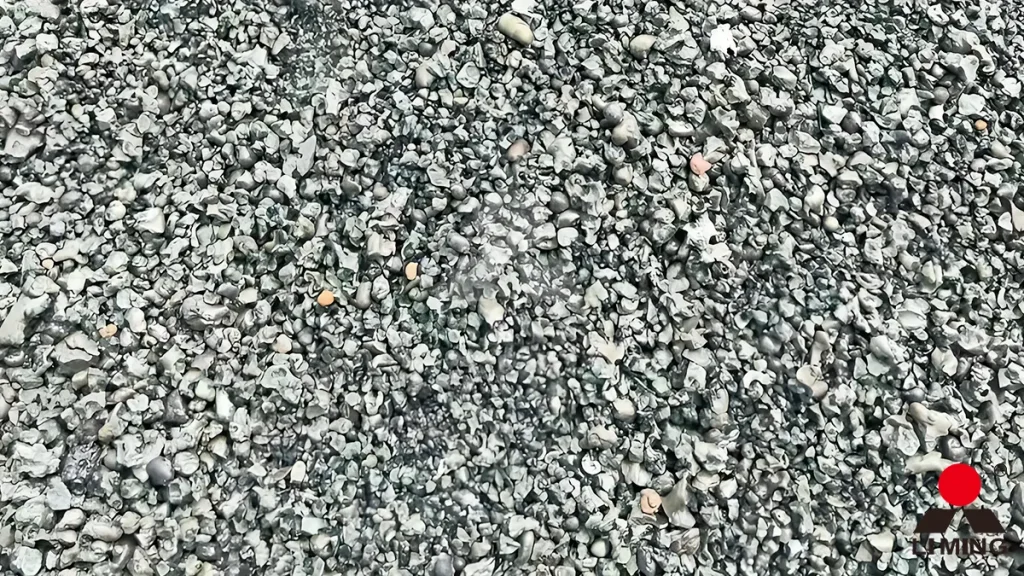
I. The Metallurgical Challenges of Tungsten Waste Rock
Tungsten deposits frequently associate wolframite and scheelite with surrounding host rocks of widely varying hardness, creating a chaotic feed mixture of soft minerals and extremely hard, abrasive quartz. Feeding this raw, unsorted material directly into fine sand-making machinery makes mechanical wear and chamber blockages nearly impossible to control.
Tungsten waste rock originates primarily from two sources: concentrator tailings and underground development waste. These two streams possess vastly different particle sizes, moisture levels, and clay contents. Before committing capital to equipment, mine operators must conduct laboratory sampling to measure the quartz abrasion index and mud percentage rather than relying on guesswork.
II. Single-Stage Crushing: Direct VSI Sand Making
The single-stage flowsheet feeds raw waste rock directly into a Vertical Shaft Impactor (VSI). This configuration requires fewer machines, occupies a small physical footprint, and can be commissioned rapidly. It is well-suited for small-scale lines where the incoming material is uniform, pre-screened, and relatively low in hardness.
However, when the waste rock contains oversized boulders or dense quartz intrusions, feeding it directly into a high-speed VSI accelerates the wear of the rotor throw heads exponentially. The crushing cavity struggles to remain properly choke-fed, causing the sand yield and particle cubicity to fluctuate wildly.
Single-stage crushing is viable only under one strict condition: the raw material must pass through an aggressive pre-screening deck to scalp away all large boulders and hard chunks, ensuring that only uniform, medium-fine gravel enters the sand maker. If the feed is strictly controlled, a small line can save the initial capital expenditure of purchasing a secondary cone crusher.
III. Two-Stage Crushing: Cone Reduction Followed by VSI Shaping
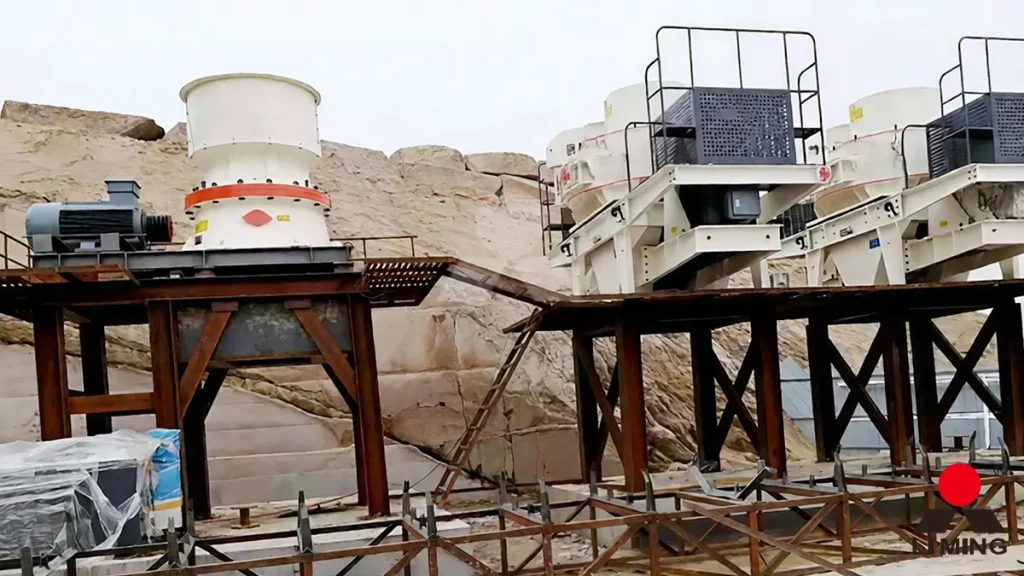
The two-stage crushing flowsheet utilizes a hydraulic cone crusher for medium and fine reduction, bringing the stone down to the optimal sand-making feed size (under 45 millimeters). The material then enters the Vertical Shaft Impactor for fine crushing and kinetic shaping, with an optional roller crusher installed to clean up oversized recirculating gravel.
The core workhorses of this route are the HST Series Single-Cylinder Hydraulic Cone Crusher (or HPT Multi-Cylinder Hydraulic Cone Crusher) for secondary reduction, paired with the VSI6X Series Sand Maker for shaping. The cone crusher utilizes lamination compression to squeeze the chaotic mixture of hard and soft rock into a uniform intermediate size. The downstream VSI receives a steady, calibrated feed, resulting in even rotor wear, stable sand yield, and predictable aggregate cubicity.
IV. Which Configuration is More Cost-Effective?
Determining which flowsheet is more profitable begins with an absolute mechanical limit: the maximum allowable feed size of a Vertical Shaft Impactor is strictly 45 millimeters. This is a rigid technical parameter of the VSI6X series, not an empirical estimate. If the incoming rock exceeds 45mm, the VSI cannot physically swallow it, and single-stage crushing becomes an engineering impossibility.
Therefore, single-stage crushing is strictly applicable only to fine tailings or pre-screened gravel where the feed is already smaller than 45mm. Underground blasted waste rock frequently exceeds 100 to 200 millimeters; for these feeds, an upstream secondary crusher is mandatory.
The Metallurgy of Tungsten: Hardness vs. Brittleness
The primary metallurgical headache with tungsten ore is not just its hardness, but its extreme brittleness. On site, engineers frequently observe that while the rock is not excessively hard, over-pulverization is severe. Compressive lamination crushing (in a cone crusher) fractures rock by squeezing, generating minimal ultra-fine dust. Kinetic impact crushing (in a VSI) relies on high-speed collisions, which inherently generates significant dust.
If the plant’s objective is to prepare feed for a downstream tungsten concentrator, preserving recovery is paramount. Over-pulverizing the rock turns valuable tungsten into microscopic slimes that cannot be floated, ruining extraction rates. In a commercial project in Shangrao, Jiangxi, the plant deployed an HPT Series Multi-Cylinder Cone Crusher paired with an HST Series Single-Cylinder Cone Crusher to reduce tungsten ore below 8 millimeters for ball mill feed. Because the facility served a concentrator rather than an aggregate market, minimizing over-pulverization via lamination crushing was the absolute top priority.
Conversely, producing commercial construction sand follows completely different economic rules. Construction sand is valued on continuous gradation and cubicity. Excess rock powder can be cleanly washed away using sand washers and fine sand recovery units. The VSI6X delivers single-machine capacities exceeding 100 to 120 tons per hour, requiring fewer machines and a smaller physical footprint—delivering genuine commercial advantages.
V. Calculating Sand Yield and Consumable Wear Expenses
When calculating sand yield, plant managers must distinguish between two different metrics: single-machine capacity and whole-line yield rate.
Single-machine capacity is direct: a high-capacity VSI6X sand maker outputs 100 to 120 tons per hour of finished sand, whereas a cone crusher equipped with a fine sand-making cavity outputs only 40 to 60 tons per hour of sub-5mm material. Sizing the plant relies directly on these engineering throughput metrics.
Whole-line yield rate measures the percentage of raw intake that converts into saleable sand. In standard granite lines, finished sand yield frequently exceeds 50% (producing one ton of sand from two tons of rock). However, for tungsten waste rock, this figure must be discounted due to brittleness. Kinetic impact comminution generates a higher percentage of ultra-fine dust (<0.075mm) from brittle tungsten rock than from granite. Estimating a yield of 40% to 45%, producing one ton of commercial sand consumes approximately 2.2 to 2.5 tons of raw waste rock.
Accounting for wear parts requires site-specific testing. Tungsten waste rock is universally associated with quartz, imparting substantial abrasiveness. However, the exact quartz content varies drastically from mine to mine; wear part replacement cycles must be calibrated using site-specific rock abrasion tests.
Finally, do not overlook the cost of over-pulverized dust. Stone powder can be sold for cement, brick manufacturing, or road base fill, but it commands a much lower price than construction sand. When deploying a VSI on brittle tungsten rock, the increased volume of dust must be balanced against the cost of wastewater treatment and tailings management.
Frequently Asked Questions (FAQ)
1. How do I select the right sand-making machinery for tungsten ore?
The standard engineering approach is a secondary cone crusher for fine reduction paired with a Vertical Shaft Impactor (VSI) for sand shaping. The VSI handles feeds up to 45mm with an impeller speed between 1200 and 1400 RPM. A downstream roller crusher can be added to process 10-20mm circulating gravel, elevating the final sand yield.
2. How can an operator maintain stable production when tungsten waste rock hardness fluctuates?
Implement a two-stage crushing flowsheet. The hydraulic cone crusher absorbs the chaotic mixture of hard quartz and softer minerals, reducing the rock to a uniform intermediate size. This ensures the downstream VSI sand maker is choke-fed with consistent material, resulting in even wear on the rotor tips and predictable aggregate cubicity.
3. What role does wet washing play in tungsten waste rock sand making?
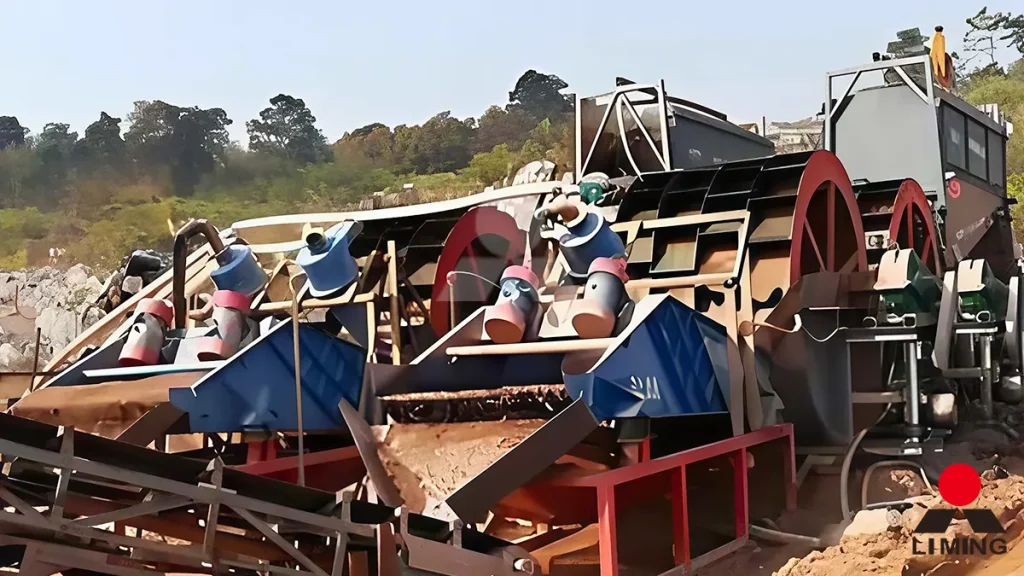
When the waste rock contains high mud or generates excessive fines due to brittleness, deploying an XSD Series Wheel Sand Washer paired with a fine sand recovery unit is mandatory. The water washes away the clay and excess powder while the recovery screen captures valuable fine sand, guaranteeing the finished product meets strict commercial concrete cleanliness standards.
