Skid Mounted Mobile Crushing Plant Definition Structure And Application Boundaries
October 29, 2026
Summary:A skid-mounted mobile crushing plant integrates heavy comminution equipment onto a structural steel chassis, completely eliminating the need for poured concrete foundations. This engineering guide details the definition, three core components, and operational boundaries of semi-mobile modular crushing plants. Written by a senior process engineer, the article analyzes a 250 TPH gold ore project in Ghana executed by Liming Heavy Industry, explaining how modular assembly accelerates on-site commissioning to under ten days, drastically lowering initial capital expenditure and daily operating expenses.
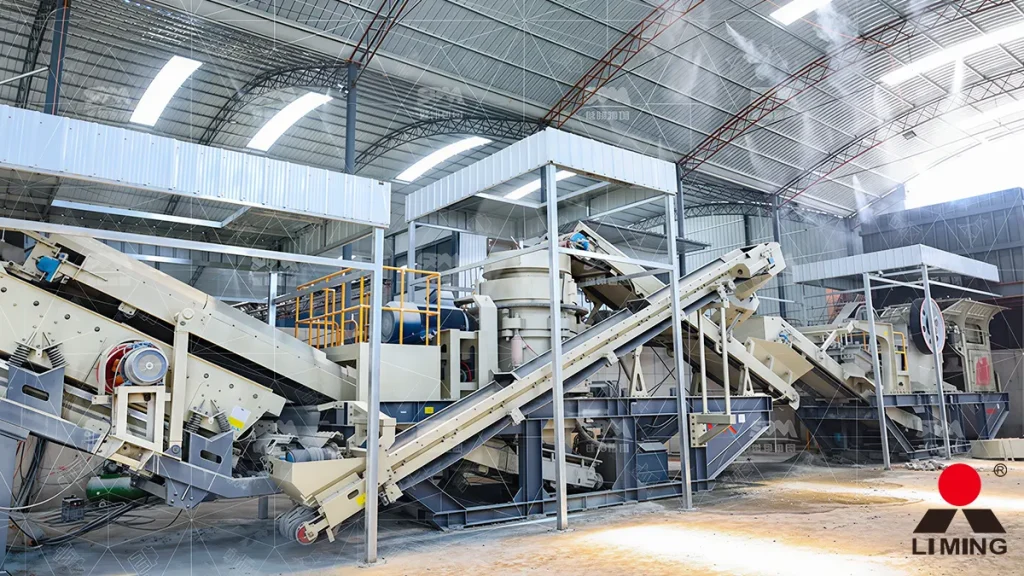
A skid-mounted mobile crushing plant—referred to in the mining industry as a semi-mobile crushing station or modular crushing plant—is an integrated comminution circuit that mounts primary crushing, screening, and feeding machinery onto a heavy structural steel skid chassis. Unlike stationary facilities, it connects to the ground with zero poured concrete foundations. It does not incorporate wheels or crawler tracks for autonomous transit; instead, when relocation is required, the plant is disassembled, loaded onto flatbed transport trucks, hauled to the next mining sector, and reassembled on compacted earth.
Operational loads are dispersed evenly through the heavy structural steel base onto a leveled ground pad, completely eliminating the costly delays associated with civil concrete excavation, pouring, and curing. A customized production line delivered by Liming Heavy Industry for a gold mine in Ghana represents a textbook deployment: delivering an hourly capacity of 250 tons of 5 to 30-millimeter gold ore aggregate. The core machinery suite includes a PEW Series European Jaw Crusher, an HPT Series Multi-Cylinder Hydraulic Cone Crusher, an F5X Series Heavy-Duty Vibrating Feeder, and an S5X Series Vibrating Screen, integrated with modular belt conveyors. Operating in a remote African region lacking high-voltage grid connections, the entire plant is powered directly by heavy industrial diesel generators, achieving commercial commissioning within seven days of arrival.
I. Terminology: Skid-Mounted, Semi-Mobile, and Modular Plants
In international trade, the terms “skid-mounted crushing plant,” “semi-mobile crushing plant,” and “modular plant” refer to the exact same mechanical architecture. The naming variation reflects different engineering perspectives rather than physical differences: “skid-mounted” refers to the heavy steel runners that sit directly on the ground, while “modular” refers to the prefabricated, bolt-together structural sections.
Determining whether a facility falls into this category relies on a single engineering criterion: Is there a permanent poured concrete foundation connecting the machinery to the earth?
Traditional stationary plants anchored to concrete piers and mobile plants equipped with onboard crawler tracks or highway pneumatic tires do not belong to this category. The skid-mounted plant achieves a unique middle ground: it eliminates the heavy initial capital expenditure of civil concrete works while maintaining the massive volumetric capacity and mechanical stability of a fixed plant.
II. The Three Core Structural Components
A complete modular skid-mounted crushing plant is constructed from three distinct structural groups:
- Core Comminution Machinery: The primary crushers, cone crushers, vibrating screens, and feeders that dictate the plant’s throughput capacity and finished aggregate gradations.
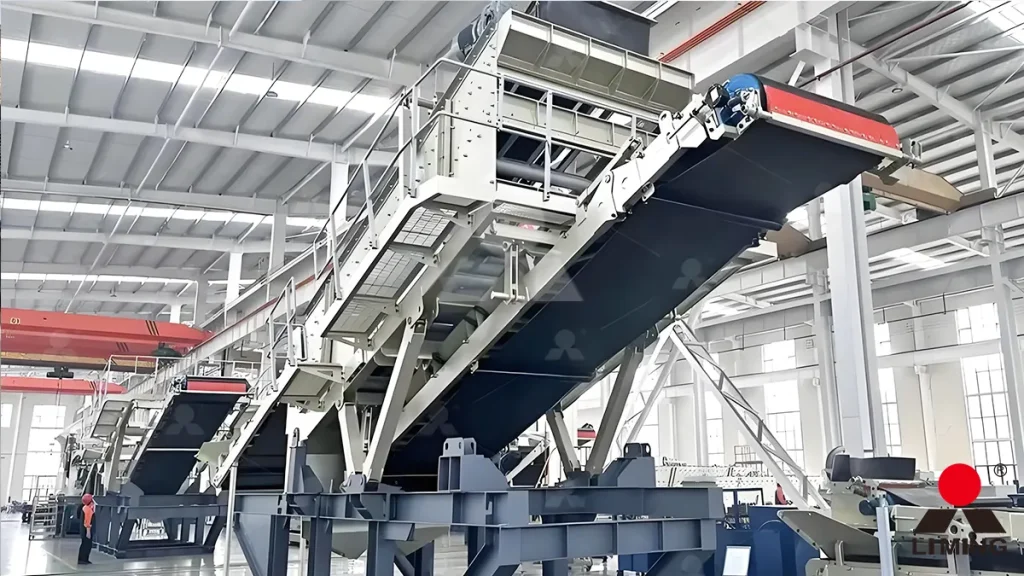
- Custom Structural Steel Fabrications: Heavy-duty skid runners, transition chutes, raw material dump hoppers, and intermediate surge bins. These prefabricated components elevate the host machines to their required operating heights and absorb material drop impacts, fully integrated into the steel chassis prior to factory dispatch.
- Standardized Access and Safety Assemblies: Industrial steel grating walkways, non-slip stairways, and heavy safety handrails. These components bolt directly to the frame, ensuring complete maintenance accessibility and operational safety without requiring on-site cutting or welding.
In our Ghana gold mining project, all three structural groups were pre-assembled and tested at the Liming Heavy Industry manufacturing hub. On site, assembly relied strictly on high-strength bolted connections, virtually eliminating field welding. Mechanical installation was completed within seven to ten days of site delivery.
Table 1: Structural Composition and Function Matrix
| Component Group | Included Machinery & Parts | Primary Engineering Function | Ghana 250 TPH Project Reference |
|---|---|---|---|
| Core Machinery | Vibrating Feeders, Jaw Crushers, Cone Crushers, Screens, Conveyors | Dictates plant capacity and finished aggregate specifications; the primary comminution unit | F5X Vibrating Feeder, PEW860 Jaw Crusher, HPT300 Cone Crusher, S5X Vibrating Screen |
| Structural Steel Fabrications | Skid runners, receiving hoppers, surge bins, drop chutes | Elevates machinery to operational heights, absorbs dynamic loads, disperses weight | Factory-integrated steel skid chassis with bolted on-site assembly |
| Standard Safety Assemblies | Grated steel walkways, access stairways, safety handrails | Guarantees operational inspection access and workplace safety compliance | Pre-engineered modular bolted walkways and ladders |
III. Optimal Engineering Scenarios for Skid-Mounted Plants
Advancing open-pit mining operations represent the quintessential application for skid-mounted plants. As the extraction face progresses deeper or farther into the deposit, the haulage distance for heavy dump trucks expands. Mining guidelines recommend positioning the primary crushing station directly on the working bench of the pit. When the haulage distance exceeds three kilometers, the skid-mounted plant is disassembled and shifted closer to the active face, significantly compressing truck fuel consumption and daily operating expenses.
Furthermore, projects with planned operational lifespans ranging from several months to five years are ideally suited for this architecture. For operations located in remote areas lacking high-voltage electrical grids, pairing a skid-mounted plant with an independent diesel generator provides immediate commercial production, entirely bypassing the lengthy regulatory approvals and civil construction periods required for permanent facilities.
IV. Application Boundaries: Four Scenarios Where Skid-Mounted Plants Should Not Be Selected
While highly versatile, a skid-mounted plant is not a universal solution. Plant engineers must avoid deploying this architecture under four specific operating conditions:
- High-Frequency Relocation Projects: If a project requires moving the crushing plant every few weeks, skid-mounted units should not be selected. The labor, crane rentals, and production downtime required to unbolt and transport the modules will consume any financial savings achieved on civil engineering.
- Frequent In-Pit Bench Repositioning: If the machinery must constantly crawl alongside an excavator inside the quarry pit, deploy a fully autonomous, crawler-tracked mobile crushing plant. A skid-mounted unit has no independent propulsion and requires a full disassembly cycle to move even fifty meters.
- Continuous Regional Highway Transit: If the equipment must travel frequently across public highway networks between disparate municipal projects, select a wheeled mobile crushing plant. Wheeled units conform strictly to highway dimensional limits and connect directly to commercial semi-trucks via standardized kingpins.
- Permanent Concessions Exceeding Ten Years: If a mine boasts proven mineral reserves supporting continuous operation at a single fixed location for ten to twenty years, constructing a permanent stationary facility anchored to concrete piers remains the most cost-effective long-term solution.
Prior to finalizing equipment procurement, engineers must verify three foundational metrics: the planned relocation cycle of the extraction face, the local availability of high-voltage commercial electrical power, and the projected operational lifespan of the project.
Frequently Asked Questions (FAQ)
1. Does a skid-mounted mobile crushing plant truly require zero concrete foundations?
Yes. The heavy structural steel skid chassis is engineered with an expansive surface area that disperses dynamic kinetic loads directly across a leveled and compacted ground pad. This eliminates all concrete pouring and curing timelines, allowing full mechanical installation to be completed within seven to ten days of arrival. However, the site must be thoroughly compacted and tested for soil-bearing capacity prior to positioning; placing heavy crushing machinery on loose, uncompacted mud will lead to structural shifting.
2. Are skid-mounted, semi-mobile, and modular crushing plants identical?
Yes. They represent the exact same structural architecture, with the three terms reflecting differing industry perspectives. The defining technical criterion is the complete absence of a permanent poured concrete connection to the earth. Plants mounted on pneumatic tires or crawler tracks do not belong to this category, nor do permanent stationary facilities.
3. What are the primary reasons to avoid selecting a skid-mounted plant?
There are three primary red flags: first, when relocation frequency is extremely high (where disassembly downtime cancels out mobility gains); second, when the machine must crawl continuously within an active quarry pit (mandating tracked machinery); and third, when the mine has a proven operational horizon exceeding a decade at a single site (where permanent stationary structures deliver lower long-term amortization costs).
The skid-mounted mobile crushing plant delivers the massive throughput capacity and mechanical stability of a permanent installation combined with the logistical agility of a transportable asset. By eliminating civil engineering delays, it enables mining enterprises to achieve commercial production weeks earlier.
Liming Heavy Industry delivers world-class modular comminution technology and turnkey Engineering, Procurement, and Construction (EPC) solutions. Whether you require a heavy-duty PEW Jaw Crusher module for primary reduction or an HPT Multi-Cylinder Cone Crusher skid for fine crushing, our engineering team customizes complete circuits tailored to your site geology. Contact our technical team today to evaluate your project feasibility and receive a customized modular plant proposal.
