Which Crusher Is Best for Recycled Concrete Equipment and Prices
August 18, 2026
Summary:Processing high-hardness recycled concrete and construction demolition waste requires specialized comminution equipment capable of handling abrasive rock and steel rebar. This engineering guide explains the bright future of recycled concrete aggregates and evaluates the differences between stationary and wheeled mobile crushing plants. It details the core machinery required—including heavy-duty Jaw Crushers, tramp-iron-resistant Cone Crushers, and Vertical Shaft Impactors—to help contractors reduce long-term operating expenses and produce high-quality construction materials.
Recycled concrete aggregate refers to the reusable material generated after crushing, cleaning, and classifying waste concrete blocks, old building rubble, discarded bricks, and excavated soil. If left untreated, construction and demolition waste causes severe environmental pollution and occupies massive amounts of landfill space. However, through professional mechanical processing, the vast majority of this waste can be transformed into valuable resources such as recycled commercial aggregate, road base, and structural backfill.
As the construction industry shifts toward sustainable practices, understanding how to process this material is critical. What are the market prospects for recycled concrete? Which crushing machinery is best equipped to handle high-hardness concrete? And how much does a complete concrete recycling plant cost? This guide provides a detailed engineering analysis to answer these questions.
The Bright Future of Recycled Concrete Aggregates
The utilization of recycled aggregates drastically reduces the extraction of natural sand and gravel, mitigating the environmental impact of infrastructure development. The market prospects for concrete recycling are exceptionally broad, driven by several key factors:
- Circular Economy and Sustainability: Transforming waste into valuable building materials reduces reliance on natural resources and lowers the carbon footprint of new construction projects, aligning perfectly with global green building trends.
- Government Policy Support: Governments worldwide are introducing strict regulations against landfilling demolition waste while providing tax incentives, subsidies, and mandatory recycling targets to support recycling contractors.
- Technological Innovation: Advancements in heavy machinery—such as automated rebar extraction and high-efficiency air classification—have drastically improved the purity of recycled aggregates, allowing them to be used in high-end infrastructure projects.
- Surging Market Demand: Rapid urbanization requires constant demolition and rebuilding. Simultaneously, the rising cost of natural river sand has made recycled concrete an economically highly attractive alternative for ready-mix concrete plants.
- Economic and Environmental Win-Win: Recycling contractors generate significant revenue by selling the crushed aggregate and reclaimed steel scrap, while simultaneously saving millions in landfill tipping fees.
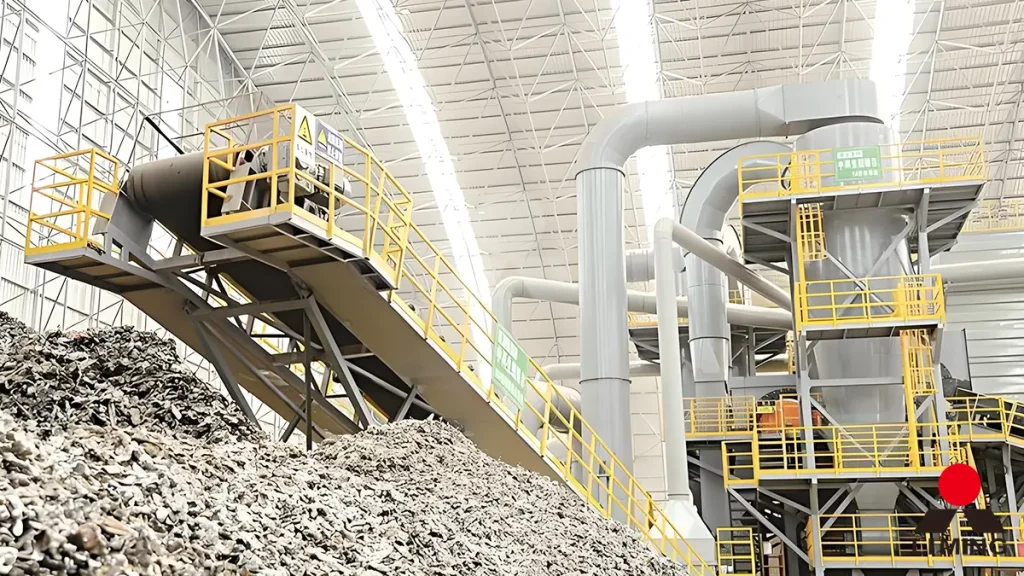
Mobile vs. Stationary: Choosing the Right Plant Architecture
Because waste concrete often contains high-strength cement and embedded steel rebar, standard aggregate crushers can suffer catastrophic damage if not properly configured. Furthermore, the location of the waste dictates the architecture of your plant. Equipment is generally divided into mobile and stationary categories.
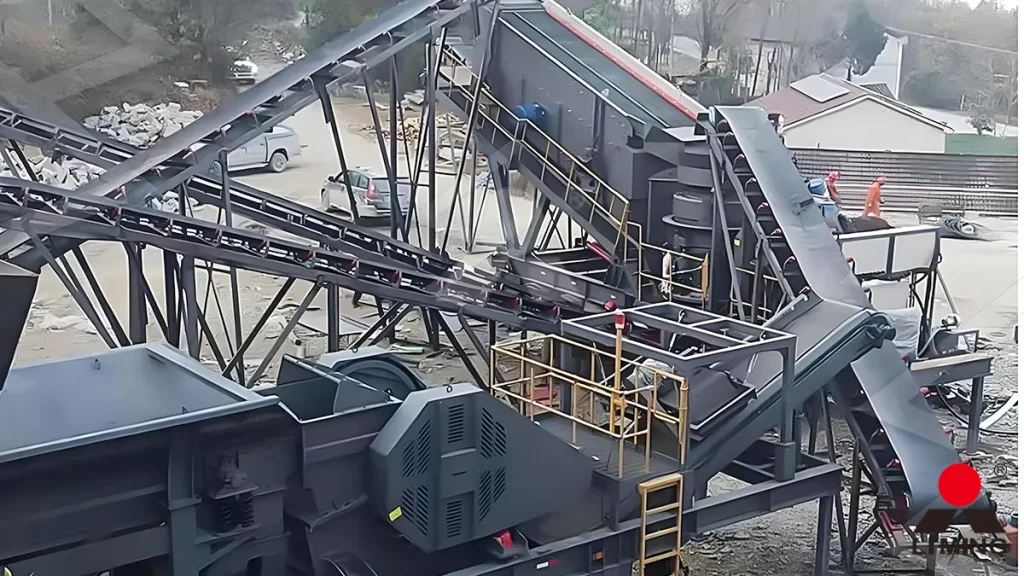
1. Wheeled Mobile Concrete Crushing Plants
Equipment Types: Wheeled mobile jaw crushers, mobile impact crushers, and mobile cone crushers (such as the Liming Heavy Industry NK Series and MK Series).
Engineering Characteristics: Mobile plants are ideal for contractors dealing with scattered demolition sites across a city. The entire crushing, screening, and magnetic separation system is integrated onto a single heavy-duty wheeled chassis. These plants can be towed directly to the demolition site via highway trucks and begin crushing immediately. While the initial capital expenditure is higher, mobile plants completely eliminate the need for expensive civil concrete foundations and drastically reduce the daily operating expenses associated with trucking raw rubble across town.
2. Stationary Concrete Crushing Plants
Equipment Types: Fixed jaw crushers, impact crushers, cone crushers, and vertical shaft impactors installed on permanent steel and concrete structures.
Engineering Characteristics: Stationary plants are designed for dedicated, long-term recycling centers that receive massive, continuous deliveries of demolition waste. Compared to mobile units, stationary plants offer much higher production capacities and lower initial equipment purchase costs, making them highly economical for large-scale, fixed-location operations.
Which Crusher is Best for High-Hardness Concrete?
Concrete quality directly impacts building safety, and the same applies to recycled concrete. To guarantee the quality of the final aggregate, the selection of the individual crusher units must be scientifically matched to the material’s hardness and output requirements. Here are the core machines utilized by Liming Heavy Industry for processing hard concrete.
1. Primary Coarse Crushing: Jaw Crusher
The jaw crusher is the mandatory first step for processing large, high-hardness concrete slabs.
- High Throughput: Featuring a deep V-shaped crushing cavity without dead zones, machines like the PEW Series European Jaw Crusher can accept massive chunks of demolition rubble without clogging the feed opening.
- Heavy-Duty Durability: The crushing chamber is built with advanced wear-resistant manganese steel plates, ensuring the machine does not suffer mechanical failure even during prolonged operations against 50 MPa high-strength concrete.
- Environmental Control: Modern jaw crushers operate with exceptionally low noise pollution, allowing for green production in urban or suburban recycling centers.
2. Secondary Crushing for Hard Material: Hydraulic Cone Crusher
While impact crushers are excellent for soft brick, high-hardness concrete requires specialized compression crushing.
- Lamination Crushing: The HST Single-Cylinder Hydraulic Cone Crusher utilizes a lamination crushing principle. This delivers a massive volumetric throughput and produces a highly uniform particle size.
- Tramp Iron Protection: This is critical for concrete recycling. If a piece of un-extracted steel rebar enters the chamber, the hydraulic cylinder instantly drops the main shaft, allowing the steel to pass without snapping the internal components.
- High Return on Investment: The heavy-duty cast steel arms and wear-resistant bronze bushings easily withstand the immense shock loads of crushing cured concrete, generating long-term high profits with minimal maintenance downtime.
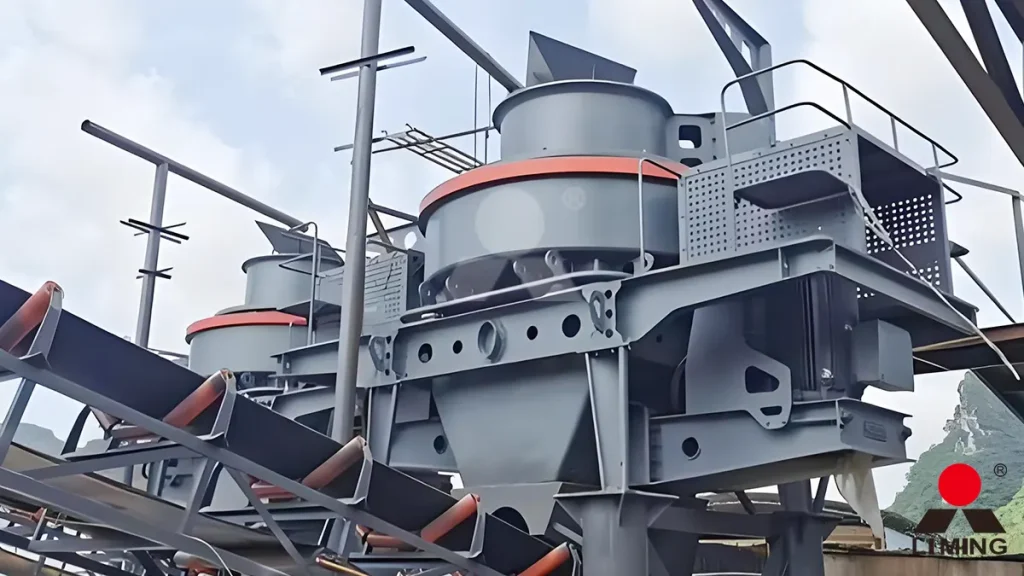
3. Tertiary Shaping and Fine Crushing: Vertical Shaft Impactor (VSI)
To produce premium recycled sand, a shaping machine is required to knock the old cement mortar off the original aggregate.
- Perfect Particle Shape: The VSI6X Series Sand Maker uses a high-velocity “rock-on-rock” impact principle. This selectively shatters the weaker mortar bonds, increasing the percentage of perfect cubic aggregates and eliminating flat, needle-like particles.
- Safety and Maintenance: Designed with an automated hydraulic lifting cover, maintenance teams can quickly open the chamber to inspect rotor wear parts without dismantling the entire machine, saving considerable labor time.
Concrete Crusher Models and Prices
There are numerous types and models of concrete crushers available. Consequently, acquiring an accurate quotation requires a thorough understanding of your specific project demands, including your required hourly tonnage, the maximum size of your incoming waste, and your site’s mobility needs.
Prices vary significantly based on the technology. For example, a small, standalone stationary jaw crusher may start at several tens of thousands of dollars. In contrast, a fully integrated, high-capacity wheeled mobile crushing plant—complete with built-in vibrating screens, automated electrical panels, and overband magnetic separators—requires a capital investment of hundreds of thousands of dollars. However, the mobile unit’s ease of use, elimination of foundation costs, and rapid deployment speed ensure a much faster payback period.
Different production requirements dictate different model configurations, and prices vary depending on the manufacturer’s engineering standards. To guarantee the quality of your concrete aggregate, you must select your equipment scientifically.
Liming Heavy Industry provides comprehensive, tailor-made solutions for construction and demolition waste recycling. From installing overband magnets to multi-stage crushing and environmental screening, we design the entire flow to match your budget and capacity. Contact our engineering team today to receive a free plant configuration layout and an accurate, direct-from-factory equipment quotation.
