50-100 TPH Granite Crushing Plant In Mali
September 4, 2026
Summary:As infrastructure development in Mali accelerates, the demand for premium commercial aggregate is surging. This engineering guide details the optimal 50 to 100 TPH granite crushing plant configuration for West Africa. Written by a senior engineer at Liming Heavy Industry, the article explains why processing highly abrasive granite strictly requires an HPT Multi-Cylinder Cone Crusher instead of an impact crusher. It details a closed-circuit system that efficiently outputs three distinct aggregate specifications (0-5mm, 5-15mm, and 15-25mm) while minimizing long-term operating expenses.
In recent years, with the vigorous development of infrastructure construction—such as highways and bridges—and the booming local mining industry (particularly gold extraction) in Mali, the market demand for high-quality building aggregates has surged. Due to its hard texture and exceptionally high compressive strength, granite has emerged as one of the most premium raw materials for sand and gravel in the region.
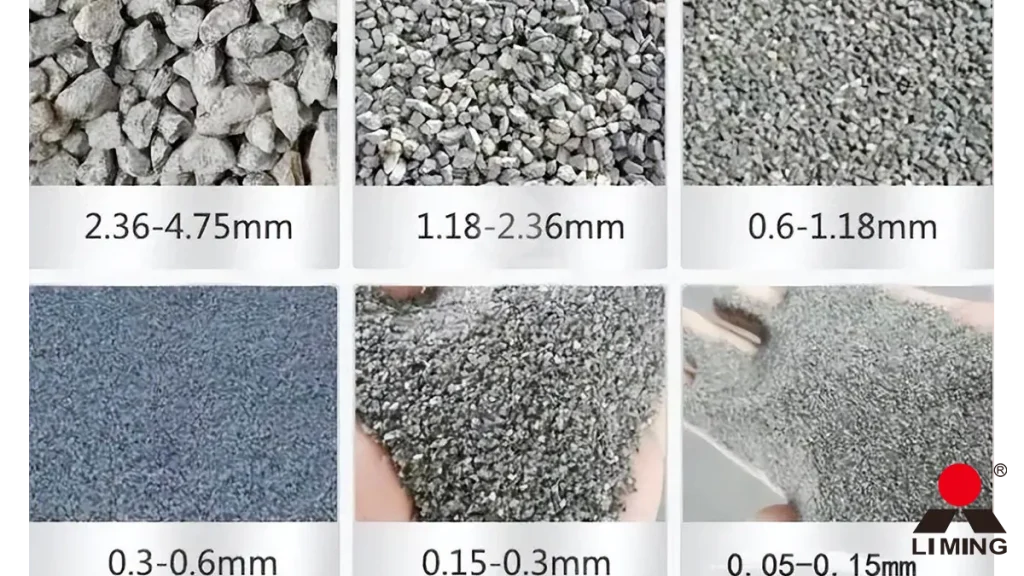
Recently, we received a technical consultation from a client in Mali: they planned to invest in a granite aggregate production line with an hourly capacity of 50 to 100 tons. The client required the finished product to be strictly classified into three specifications: 0-5mm (manufactured sand), 5-15mm, and 15-25mm (crushed stone), primarily to supply local concrete batching plants and road construction projects.
As a senior process engineer at Liming Heavy Industry, I will draw upon my extensive experience with West African working conditions to provide a detailed analysis of the process design and core equipment selection for this medium-to-small scale granite crushing line.
I. Analyzing Project Challenges and Material Characteristics
Before configuring any granite crushing production line, we must prescribe the correct engineering solution by fully understanding the physical characteristics of the material:
- High Hardness and High Abrasiveness: Granite is an incredibly hard igneous rock (registering between 6 and 7 on the Mohs hardness scale) and possesses a high silica content. If traditional impact crushers are utilized, the chrome blow bars will suffer catastrophic wear, driving daily operating expenses unacceptably high. Therefore, the classic “Jaw Crusher + Cone Crusher” hard rock circuit is absolutely mandatory.
- Multi-Specification Output Requirements: The client requires three distinct finished products: 0-5mm, 5-15mm, and 15-25mm. This dictates that the screening system must be highly precise. Furthermore, the secondary crushing equipment must possess excellent shaping capabilities to ensure the crushed stone is perfectly cubic with a low flakiness index, meeting the strict requirements of high-standard commercial concrete.
- Medium to Small Capacity Positioning: The 50 to 100 tons per hour range represents a medium-to-small production line. The capital investment threshold is moderate, making it highly suitable for small-to-medium quarry owners in Mali. The equipment configuration must balance “high cost-effectiveness” with “extreme mechanical stability.”
II. Recommended 50-100 TPH Granite Crushing Flowsheet
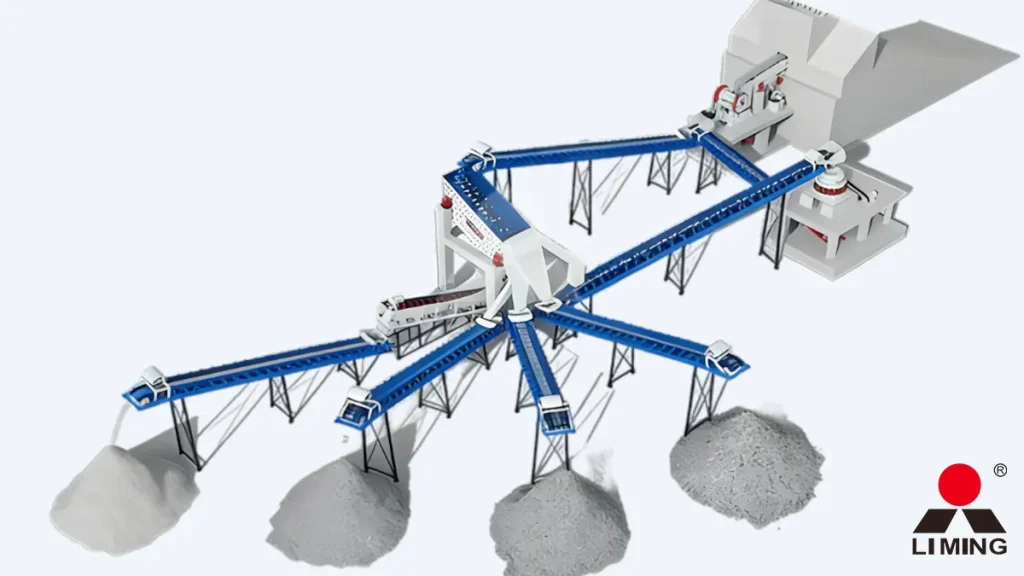
To directly address the practical demands of the Malian client, the technical engineering team at Liming Heavy Industry tailored a closed-circuit flowsheet comprising “Primary Coarse Crushing + Secondary Medium/Fine Crushing + Triple-Deck Precise Screening.”
1. The Primary Crushing Stage: C6X Series Jaw Crusher
Raw granite boulders are typically quite large. For the primary reduction stage, we strongly recommend deploying the C6X Series or traditional PE Series Jaw Crusher (such as the PE-600×900).
Engineer’s Analysis: This equipment features a deep V-shaped crushing cavity and an ultra-large eccentric stroke, allowing it to easily shatter massive raw granite blocks down to a moderate size below 150 millimeters. Its optimized toggle plate design and oversized, heavy-duty bearings ensure that the machine exhibits immense impact resistance and an incredibly low failure rate when crushing high-hardness materials.
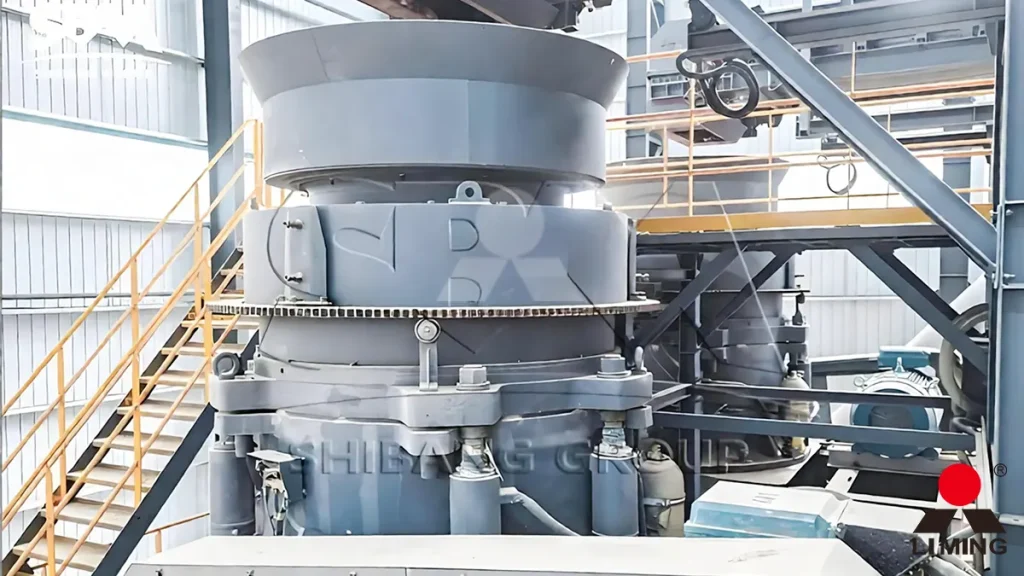
2. The Secondary Crushing Stage: HPT Multi-Cylinder Hydraulic Cone Crusher
This machine serves as the “core heart” of the entire production line. We selected the HPT series multi-cylinder hydraulic cone crusher (such as the HPT100 or HPT200) as the secondary crushing equipment.
Engineer’s Analysis: Why don’t we use an impact crusher? Because granite is simply too hard! The HPT cone crusher utilizes the lamination crushing principle, relying on the mutual squeezing action between the mantle and the bowl liner to fracture the material. Not only does the lifespan of its manganese steel wear parts far exceed that of impact crusher blow bars, but the resulting particle shape is also outstanding. By remotely adjusting the closed side setting (CSS), operators can easily control the discharge size to fall below 25 millimeters, providing the perfect raw material for the subsequent screening stage.
3. The Screening Stage: S5X Series Vibrating Screen
After being processed by the cone crusher, the material is transported via a belt conveyor to a triple-deck heavy-duty vibrating screen.
Engineer’s Analysis: By configuring a three-layer screen mesh, the material is precisely classified into three specifications: 0-5mm, 5-15mm, and 15-25mm. Any unqualified material larger than 25 millimeters is automatically routed via a return conveyor back into the cone crusher for reprocessing (forming a closed-circuit loop). The S5X series vibrating screen provides massive excitation force and high screening efficiency, effectively preventing angular granite particles from blinding the mesh, thereby ensuring the absolute purity of the three finished products.
III. Applications and Economic Value of the Finished Aggregate
The three specifications of granite aggregate processed through this engineered Liming Heavy Industry production line possess immense market value in Mali:
- 0-5mm Manufactured Sand: Features a highly round particle shape and rational gradation. It is the ideal fine aggregate for producing high-standard commercial ready-mix concrete, masonry mortar, and asphalt concrete.
- 5-15mm Crushed Stone: Frequently utilized for concrete pouring in housing construction, precast component manufacturing, and as the fine aggregate in asphalt pavement surface layers.
- 15-25mm Crushed Stone: Features a larger particle diameter and exceptional compressive strength. It is primarily used for the water-stabilized base layers of road construction, as well as serving as the core concrete aggregate for massive bridges and hydroelectric dams.
IV. Partnering with Liming Heavy Industry
When investing in a stone quarry in Africa, the continuous operational availability of your heavy machinery and the manufacturer’s dedicated after-sales support are the absolute keys to profitability. By choosing Liming Heavy Industry, you secure the following engineering guarantees:
- Direct Source Manufacturer, Engineered for Hard Rock: As a premier manufacturer with over thirty years of research and production experience, our core technologies in jaw and cone crushers are highly mature. The HPT cone crusher, in particular, is engineered specifically for high-hardness, highly abrasive rocks, drastically reducing your production cost per ton.
- Extensive African Plant Construction Experience: We possess a vast portfolio of highly successful granite and basalt crushing production lines operating across West African nations such as Mali, Senegal, and Côte d’Ivoire. We deeply understand the local climatic characteristics, power grid conditions, and harsh operational realities.
- Turnkey EPC Solutions and Comprehensive Spare Parts Supply: We provide a true one-stop Engineering, Procurement, and Construction (EPC) service—from initial site planning and equipment selection to final installation, operational debugging, and operator training. Furthermore, we maintain overseas spare parts centers, ensuring that consumable items like jaw plates and manganese mantles are supplied promptly, leaving you with total peace of mind.
Engineer’s Concluding Remark:
Building a highly efficient 50 to 100 TPH granite crushing production line requires a rational process configuration—which means resolutely abandoning impact crushers in favor of cone crushers to lower operating expenses and increase efficiency. If you are planning a sand and gravel aggregate project in Mali or any other region in Africa, we welcome you to contact Liming Heavy Industry at any time. We will provide you with complimentary site planning and highly professional, custom-engineered technical solutions!
